Best Walking Pad for a Low Ceiling
Low ceilings and walking pads: how to work out your standing height, why deck thickness matters, and which pad suits a room with little headroom.
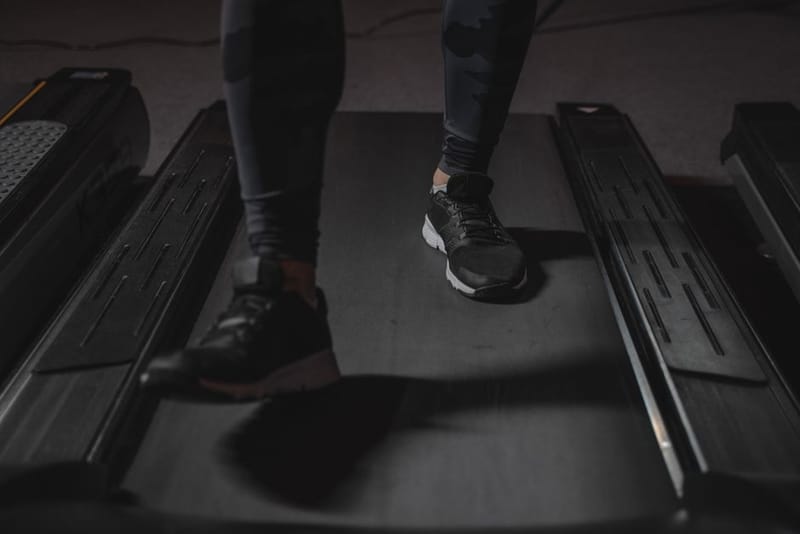
Walking pads are a brilliant fix for a small flat, but a low ceiling adds a constraint most buyers overlook: you stand on top of the deck, so your walking height is your own height plus however thick the deck is. In a loft room or a basement flat, a few centimetres of deck can be the difference between comfortable walking and ducking. Unlike a full treadmill, a good walking pad keeps that deck as thin as possible.
How much headroom does a walking pad need?
Work it out with simple arithmetic. Take your height, add the deck thickness, then add a clearance margin so you are not brushing the ceiling with every step. A sensible margin is 15 to 20 cm, which allows for the natural bob of walking and for wearing trainers. For example, someone 1.8 m tall on a 5 cm deck stands about 1.85 m, and with a 20 cm margin needs a ceiling of at least 2.05 m. Measure your actual ceiling before buying rather than assuming it is a standard height.
Why does deck thickness matter?
Deck thickness is the one spec that directly affects headroom, and it varies more than you would expect. Slim folding walking pads sit around 4 to 6 cm, while chunkier models with bigger rollers or cushioning can be noticeably taller. A thinner deck also makes the pad easier to store flat under a sofa, so it helps twice over in a small, low room. When comparing pads, check the standing deck height, not just the folded dimensions.
Which walking pad is best for a low ceiling?
The best pick is a slim, low-deck folding pad that adds the least to your standing height, such as the WalkingPad A1 Pro. Its low-profile deck keeps you close to the floor, and its double-fold design means it also stores small in the same low-ceilinged room. Avoid taller, treadmill-style pads with raised frames or handlebars if headroom is tight, since the frame can matter as much as the deck.
What if you are tall?
Taller users should be strict about the margin and honest about the maths. If you are over about 1.85 m, prioritise the thinnest deck you can find and confirm the ceiling height at the exact spot the pad will sit, allowing for any sloping ceiling. It is also worth walking at a moderate pace rather than a fast one, as a quicker stride increases how much you rise and fall with each step.
What Is a Walking Pad? A UK Guide for Small Homes

Walking Pad Weight Limits Explained
Can You Use a Walking Pad on Carpet?