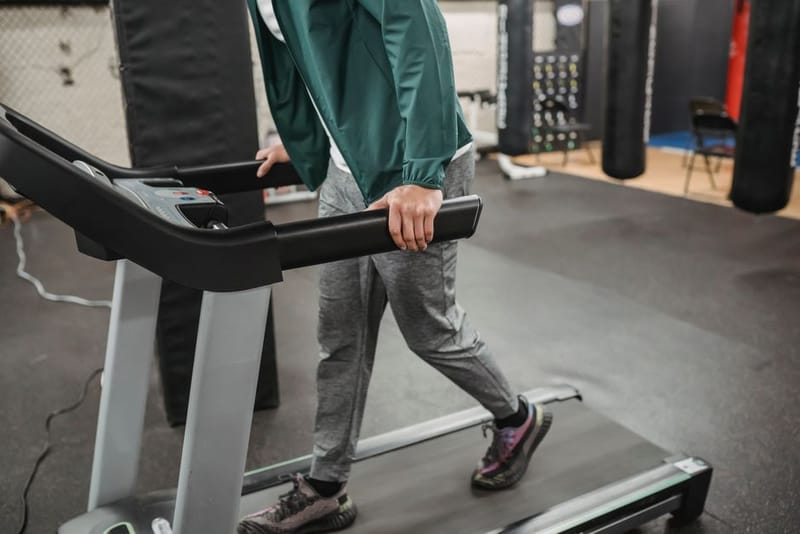
How Much Weight Can a Walking Pad Hold? Limits Explained
Most walking pads are rated for 100 to 120 kg. What that limit really means, why to stay well under it, and how it affects motor life and safety.
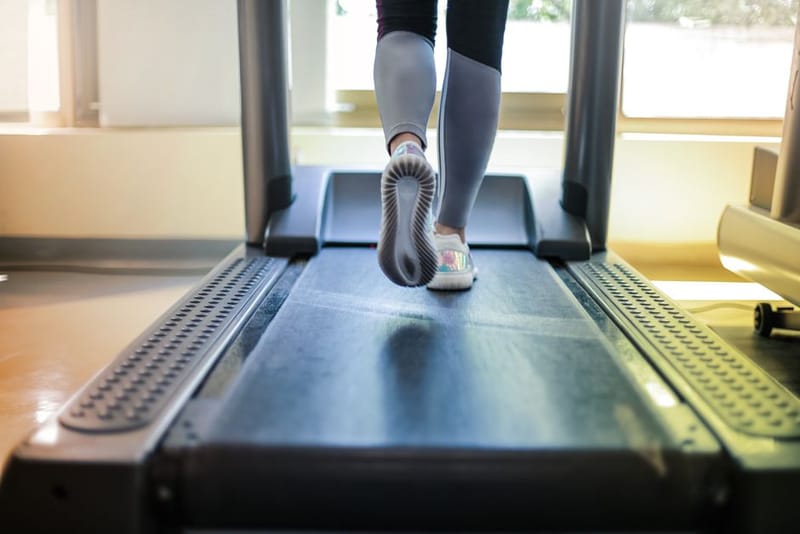
Weight limit is the most important walking pad spec that buyers skim past. It is not a marketing round number: it reflects what the motor, deck and rollers can handle safely and reliably. Because a walking pad is a compact treadmill with a small motor, that limit tends to be lower than on a full-size machine, and it is worth taking seriously.
What does a walking pad weight limit mean?
The weight limit is the maximum user weight the manufacturer certifies the pad to support during normal use. It accounts for the load on the motor, the strength of the deck and frame, and the wear on the belt and rollers, not merely whether the deck can bear the weight standing still. Most compact walking pads are rated between about 100 and 120 kg, though some heavier-duty models go higher.
Is the limit about impact or about sustained load?
This is where most explanations get it backwards. The instinct is that a weight limit exists because footfalls hit the deck far harder than your body weight - true of running, but not of walking.
Measured on a force plate, the peak vertical force during level walking is only about 104% of body weight at the weight-acceptance phase, easing to roughly 93 to 95% at push-off and dipping to about 75% through mid-stance (Barela et al., Brazilian Journal of Physical Therapy, 2014). Running, by contrast, routinely produces peaks of two to three times body weight. Walking is gentle.
So the limit is not really a structural one about whether the deck survives the shock. It is about sustained load: the motor holding a belt at constant speed against your mass, continuously, for as long as you walk. A walking pad used at a desk might run for four hours a day. That is a duty-cycle problem, and it is why headroom matters more than the raw number suggests.
Why should you stay under the limit?
Because the limit is where safe and reliable operation ends, not where you should aim to be. Using a pad at or near its rating makes the motor work harder, run hotter and wear out sooner, and it can cause the belt to slip or the pace to feel laboured. Leaving a comfortable margin below the limit keeps the motor cool, the belt smooth and the pad lasting longer.
What weight limit do you need?
Choose a pad rated comfortably above your body weight, ideally with 15 to 20 kg of headroom. If you weigh 90 kg, a pad rated to 110 to 120 kg gives sensible margin; if you are heavier, look for a model specifically rated higher, which usually pairs the higher limit with a stronger motor. Do not forget to include anything you carry or wear, though that is a minor factor for walking.
What weight limits do walking pads actually have?
Ratings cluster into broad bands rather than varying smoothly. Treat these as the shape of the market rather than a spec for any one machine - always check the figure for the exact model you are looking at.
Typical user-weight ratings by pad class
- Compact / budget under-desk pads
- Around 100 kg (roughly 220 lb). Small motors, thin decks, designed for walking only.
- Mid-range under-desk pads
- Around 110 to 120 kg (240 to 265 lb). The most common band, and where most desk pads sit.
- Higher-rated and 2-in-1 folding models
- Around 120 to 150 kg (265 to 330 lb). The higher rating usually comes with a stronger motor and a heavier machine.
- Full-size home treadmills
- Commonly 130 kg and up. Outside the walking-pad category, but the comparison shows how much the compact form factor costs you.
How do you find your pad's actual limit?
Three places, in order of reliability: the printed manual, the spec plate or sticker on the underside of the deck, and the manufacturer's own product listing. Retailer listings are the least reliable - they are frequently copied between models and go stale.
Read the wording carefully, because two different numbers get quoted. Maximum user weight is the one that matters to you. Maximum load occasionally appears instead and may include the machine itself, which makes it look more generous than it is. If a listing gives only a bare number with no label, treat it as unverified.
What happens if you exceed it?
Exceeding the limit risks both the machine and your safety. The motor can overheat and cut out, the belt can slip or stall mid-stride, and long-term you shorten the pad's life and may void the warranty. In the worst case a belt that stalls unexpectedly is a fall risk. If you are close to a pad's limit, it is a clear sign to size up to a sturdier model rather than push a compact one.
What are the signs you are working the pad too hard?
A pad under strain tells you before it fails. Watch for the belt hesitating momentarily as your foot lands, which suggests the motor is struggling to hold speed under load. A warm or faintly acrid smell from the motor housing after a long session is a thermal warning. Repeated automatic cutouts mid-walk are the clearest signal of all - most machines shut down deliberately rather than cook the motor.
Noticeable flex in the deck underfoot, or the belt drifting off-centre more often than it used to, both point the same way. None of these are proof you are over the limit - a belt that needs tensioning or lubricating produces similar symptoms - but if they appear and you are close to the rating, the rating is the first thing to reconsider.
What Is a Walking Pad? A UK Guide for Small Homes
Can You Use a Walking Pad on Carpet?
Best Walking Pad for a Low Ceiling