Renpho Active Percussion Massage Gun
A highly popular, budget-friendly massage gun that delivers reliable recovery features for everyday users.
Strengths
- Excellent value for money
- Quiet motor
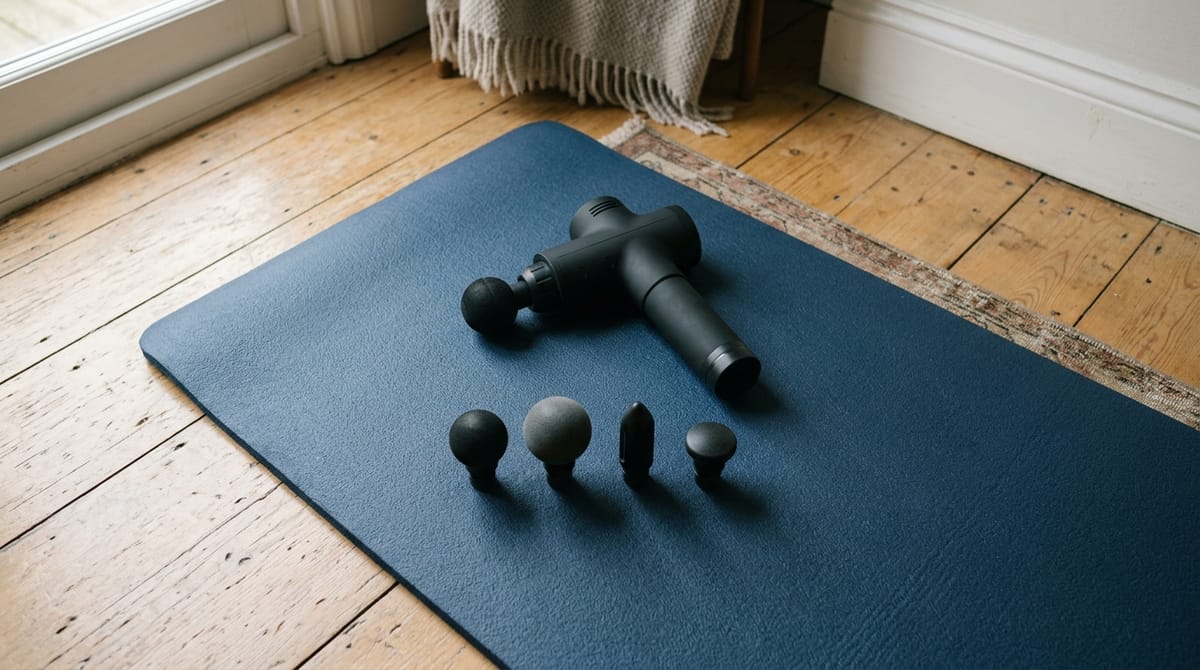
- Generous selection of massage heads
Watch outs
- Lower amplitude (stroke length) than premium brands
- Can stall under heavy pressure
- Type Percussive therapy
- Noise Quiet operation
- Portability Includes carry case
We may earn a commission if you buy through this link - it never changes the price you pay or our editorial verdict.
As an Amazon Associate I earn from qualifying purchases.
Amplitude is the spec that separates budget from premium
Massage guns are marketed on percussions per minute, and that is close to the least useful number on the box. The specification that actually changes what the device does is amplitude, the stroke length the head travels on each percussion. A short stroke delivers a fast, shallow tapping; a longer one reaches further into the tissue at the same speed. The lower amplitude noted in the drawbacks above is the honest headline difference between this and devices costing several times more, and it is worth understanding rather than glossing, because it determines what the device is good for.
Stall force is the same property viewed from the other side. It is the pressure at which the motor can no longer maintain the stroke against your body, and it is why the drawbacks mention stalling under heavy pressure. The two specs travel together: a shorter stroke and a smaller motor mean less headroom before the head stops moving, which is the point at which the device stops doing anything at all.
What that means for how you use it
The instinct when a massage gun feels ineffective is to push harder, and on a budget unit that is exactly the wrong move, because it takes you straight to the stall point. These devices work best held with light contact and moved slowly across the muscle, letting the head do the work rather than pressing it in. Used that way the lower amplitude is far less of a limitation than the spec sheet suggests.
Where it does bite is deep or dense tissue, particularly glutes and thick quads, where a longer stroke genuinely reaches things a shorter one does not. For calves, forearms, shoulders and general post-session use, the difference narrows a lot. Buy on that distinction rather than on percussions per minute, and be honest with yourself about which muscles you are actually planning to use it on.
- Type
- Percussive therapy
- Noise
- Quiet operation
- Portability
- Includes carry case