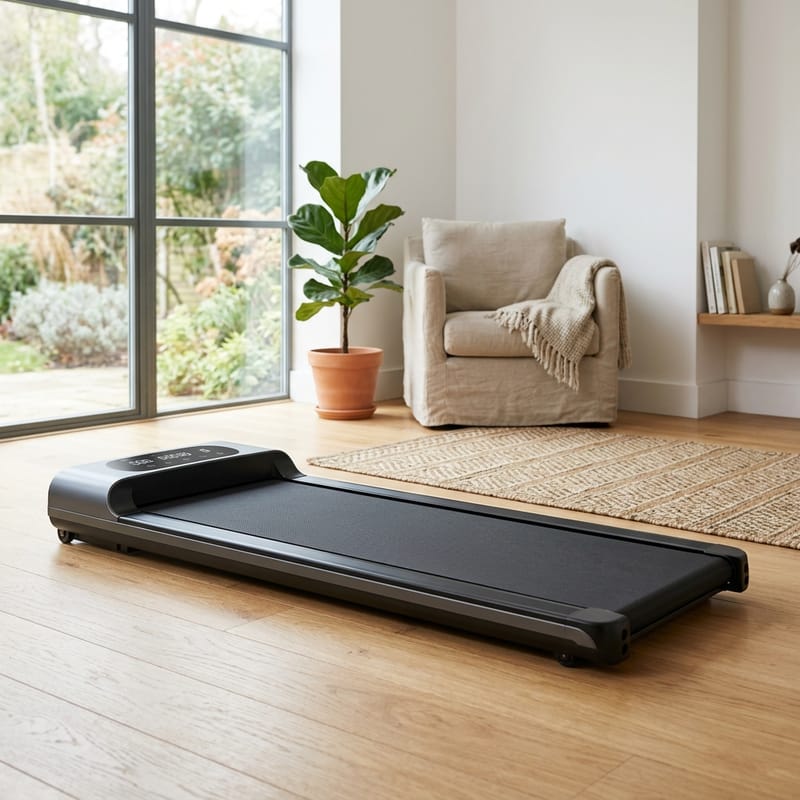
Sperax Walking Pad Treadmill 2.5HP 3-in-1
A budget 3-in-1 walking pad for small UK homes: slim, quiet and easy to store, with belt-traction caveats that suit lighter users and a walking pace.
Strengths
- Budget-friendly price for a 3-in-1 walking pad
- Slim and light (around 20kg) with transport wheels for easy under-bed storage
- Quiet enough (roughly 50 to 55dB) to use while working or watching TV
Watch outs
- Small rollers can cause belt slippage and traction issues under heavier users
- The 320lb capacity is optimistic, so it suits users under about 100kg best
- Walking-only pace (around 3.8mph) and it needs regular belt lubrication and maintenance
We may earn a commission if you buy through this link - it never changes the price you pay or our editorial verdict.
As an Amazon Associate I earn from qualifying purchases.
What the stated weight capacity actually tells you
A 320lb figure on a budget walking pad is best read as a structural limit rather than a comfort one, and the drawbacks above put the practical ceiling nearer 100kg. That gap is not marketing dishonesty so much as a different question being answered: the frame can carry the load, but the belt and rollers are what actually have to move it. Small-diameter rollers grip a shorter arc of belt, so as user weight rises the belt is more likely to slip under the push-off phase of a stride, which is the failure mode owners report rather than anything structural.
The practical consequence is that two people can buy the same machine and describe completely different products. Lighter users get the quiet, unobtrusive desk companion the specification promises; heavier users get intermittent slippage that no amount of tensioning fully settles. If you are near or above that mark, our guide to what walking-pad weight limits really mean covers how these ratings are arrived at and what to look for instead.
Belt maintenance is the real running cost
Regular belt lubrication is listed as a drawback above and it deserves more weight than a bullet point gives it, because it is the single thing that determines whether a budget walking pad lasts. Silicone lubricant applied under the belt at the manufacturer intervals keeps friction between belt and deck low; skip it and that friction rises steadily, the motor draws harder to maintain speed, and the failure that eventually arrives is usually electrical rather than mechanical. It is a few minutes every month or two, and it is not optional.
Slippage is also the useful early-warning sign, which is worth knowing precisely because it is easy to misread as a defect. A belt that hesitates as you push off is telling you either that tension has drifted or that lubrication is due, and both are user-serviceable. Treat a new hesitation as a maintenance prompt rather than a fault, and check tension before assuming the worst.