How to Store Home Gym Kit in a Small Flat
How to store home gym kit in a small flat: foldable gear, under-bed and vertical storage, furniture that doubles up, and keeping exits clear.
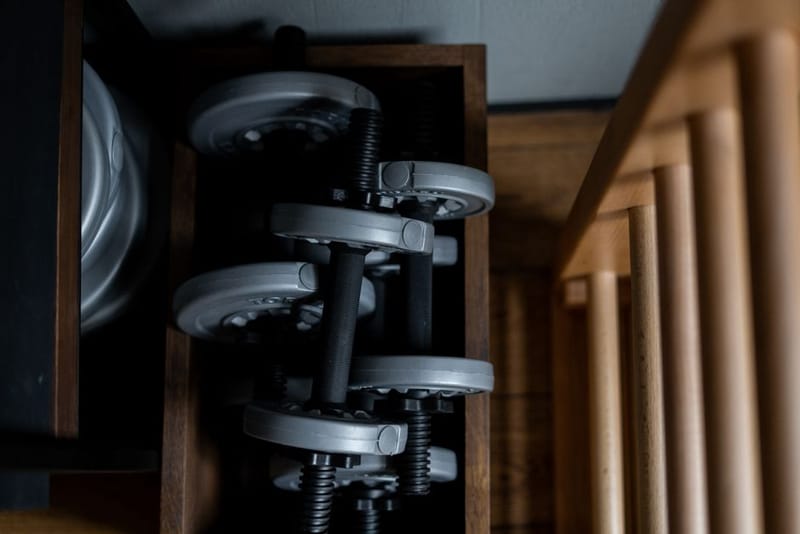
Home gym storage in a small flat comes down to one rule: nothing lives on the floor unless you are using it right now. A single set of dumbbells, a mat and a folding bench can turn a corner of a living room into a workout space, but left out they turn the same corner into an obstacle course. The trick is to pick equipment that collapses or stacks, then claim the space most flats waste - under the bed, up the walls and inside the furniture you already own.
This guide walks through where to put each type of kit, how to do it safely, and how to keep a small flat feeling like a home rather than a cramped gym. It pairs with our guide to fitting a home gym into a small corner, which covers the layout side; here the focus is purely storage.
What kit stores easily (and what doesn't)?
The easiest storage decision happens at the point of purchase. Equipment that folds, adjusts or rolls away needs a fraction of the space of its fixed-size equivalent, so a small flat rewards buying smart over buying big.
- Adjustable dumbbells replace a whole rack of fixed weights with one pair that dials from light to heavy. A rack of nine pairs becomes two handles on a shelf. Our guide to adjustable dumbbells versus a full set covers the trade-offs in detail.
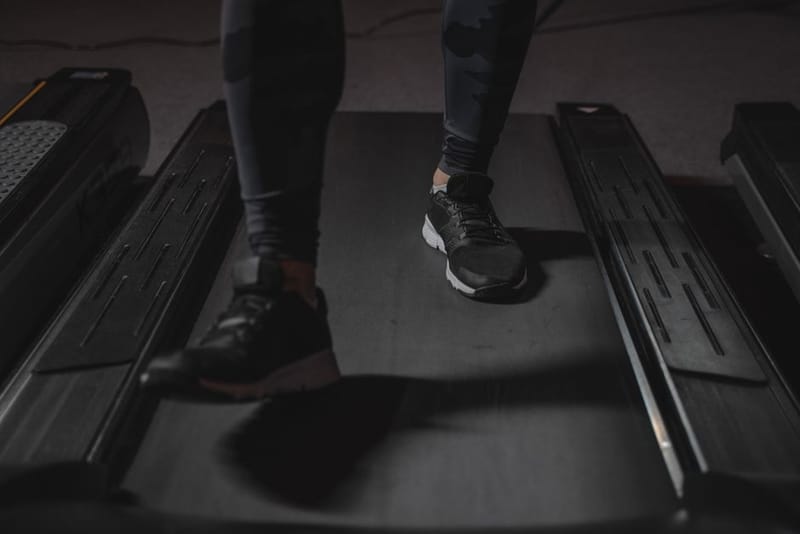
- Folding walking pads and treadmills collapse to a slim slab that slides under a bed or sofa. If cardio is your priority, a low-profile model is the difference between storable and permanent - see our pick of the best walking pad for a low ceiling.
- Folding benches fold flat and stand upright against a wall between sessions.
- Resistance bands, suspension trainers and mats are the true small-flat heroes: they weigh almost nothing, roll or hang, and store in a drawer.
The awkward customers are fixed-frame kit - a full weight bench that will not fold, a spin bike, a power rack. These earn their footprint only if you use them several times a week. If a piece of equipment cannot fold, stack or hang, it needs a permanent home you have genuinely planned for, not a hopeful gap behind the sofa.
How do you use the space under the bed?
The single largest patch of unused space in most flats sits under the bed. A standard double leaves a shallow, wide volume that is perfect for flat, dense items - exactly what gym kit tends to be.
Slide a folded walking pad, a rolled mat, weight plates in a shallow tray, and a zipped bag of bands into low, wheeled under-bed boxes so they pull out without you crawling. If your bed sits low, a set of bed risers lifts the frame a few centimetres and can double the clearance. A divan or ottoman bed with a lift-up base turns the whole footprint into a sealed store, ideal for kit you use weekly rather than daily.
Keep the heaviest items - plates, kettlebells, a compact dumbbell set - closest to the edge so you are not dragging weight across the floor. Store softer, lighter kit deeper in. A shallow, labelled box for each category (weights, bands, recovery) means you are pulling out one tray, not excavating the entire underside of the bed.
Where can you store gym kit vertically?
Floor space is scarce in a flat; wall space almost never is. Going vertical is the highest-value move you can make, because every item you hang is an item off the floor.
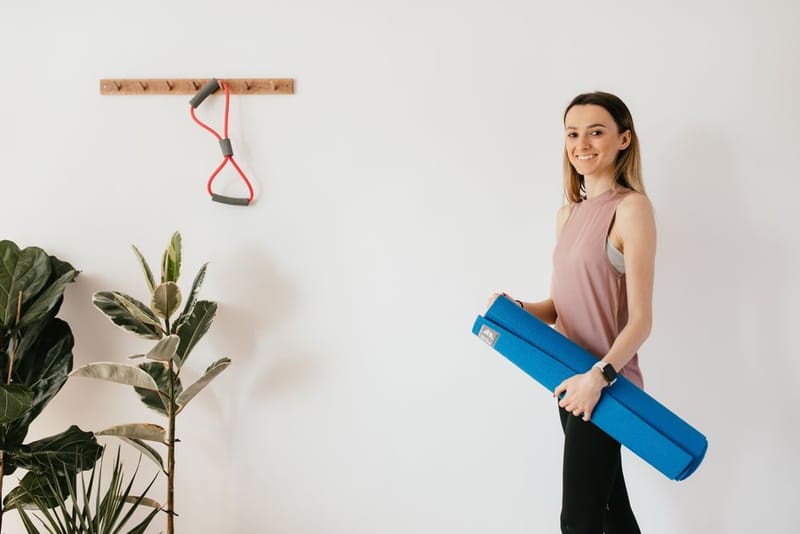
- Wall hooks and rails hold mats, resistance bands, skipping ropes and suspension trainers. A row of three or four hooks behind a door clears a surprising amount of clutter.
- A pegboard keeps small kit visible and grab-able, and looks intentional rather than makeshift on a living-room wall.
- Wall-mounted racks can hold a pair of adjustable dumbbells or a kettlebell at waist height, so the weight lives on the wall, not the carpet.
- Corner shelving uses the one part of a room nothing else wants.
One safety point matters more than any other with vertical storage: anything bearing real weight must fix into something solid. Find a stud in a timber wall or use heavy-duty fixings rated for the load in plasterboard, and never hang a loaded dumbbell rack on plasterboard alone with light screws. A dumbbell that pulls a fixing out of the wall damages both the floor and, potentially, whoever is standing below it. If in doubt, mount light kit high and keep heavy kit low.
Which furniture can double as storage?
The most space-efficient storage is furniture you would own anyway. In a small flat, every piece should earn its footprint twice.
A storage ottoman or storage bench gives you a seat and a lidded box in one, big enough to swallow a mat, bands, a foam roller and a skipping rope. Set it where you would put a coffee table or a hallway bench and the gym kit disappears into the room. Storage cubes stacked against a wall hide weights behind fabric drawers. A sideboard or media unit with deep lower cupboards will take a compact dumbbell set or a folded bench out of sight.
The principle is to store dense, heavy items low and inside solid furniture, and keep light, soft items higher or on the wall. That keeps the centre of gravity of your storage - and the room - stable and safe, and it means the heaviest lifting you do outside a workout is opening a lid.
How do you store kit without blocking exits?
It is tempting in a tight flat to line a hallway with kit or leave a walking pad standing in a doorway. Do not. A clear route to the door is not optional, and in a shared building it is a legal requirement.
The government's guide to fire safety in small blocks of flats tells residents to keep communal stairs, corridors and landings completely clear of stored belongings, because those routes are the only way out in a fire. Inside your own flat the same logic protects you: never store anything where it narrows the path between a room and the front door, and never prop equipment where it could fall across a doorway.
Store kit against the walls of a room rather than in its thoroughfares, keep folded equipment flat against a wall rather than balanced upright in a walkway, and if you share a hallway with neighbours, keep it out of there entirely. A tidy exit route is worth more than any extra square foot of storage.
Protecting floors, walls and managing damp
Storage in a flat is not just about where kit goes but about protecting the flat while it is there - especially if you rent and want your deposit back.
Put weights and any metal-framed kit down on a mat or interlocking floor tiles rather than bare laminate or carpet; it spreads the load, prevents dents and dampens noise for the neighbours below. Our guide to quiet home cardio for an upstairs flat covers the noise side in more depth.
Damp is the quiet enemy of stored gym kit. Flats trap condensation, and metal handles, plates and bench frames will spot with rust if they sit against a cold external wall or under a bed with no airflow. Keep metal kit off cold floors, wipe it down after sweaty sessions before it goes away, and leave a little air around stored equipment rather than sealing it tight against damp plaster. A few silica gel packs in an under-bed box cost pennies and keep the contents dry.
A simple one-room storage plan
Pulling it together, here is a plan that works for a single living room or bedroom doing double duty as a gym:
- Pick one wall as your kit wall. Hooks or a pegboard go here for mats, bands and ropes.
- Claim the space under the bed or sofa for flat, heavy items in labelled wheeled boxes - folded walking pad, plates, kettlebell.
- Add one piece of storage furniture - an ottoman or bench - for the soft, bulky kit you want out of sight.
- Keep the floor and the doorway clear. The only thing that should be out during a session is what you are using; it goes away straight after.
Set up this way, a small flat can hold a genuinely capable home gym without ever looking like one. If you are still deciding what to buy, our best compact cardio for a small home comparison and the corner-layout guide will help you choose kit that stores as well as it trains.
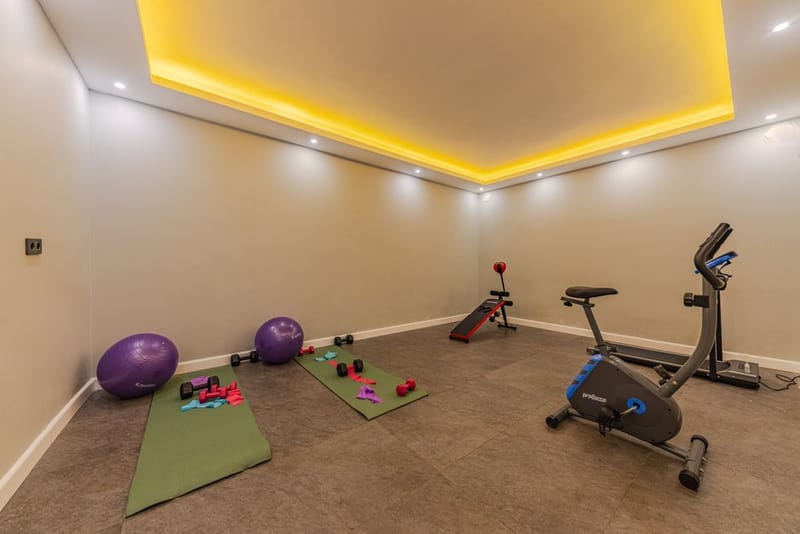
How to Fit a Home Gym in a Small Corner
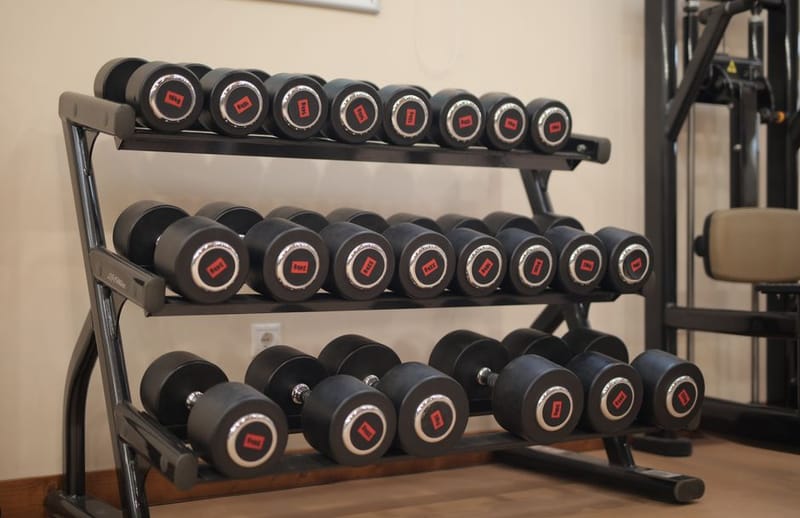
Adjustable Dumbbells vs a Full Set
Best Walking Pad for a Low Ceiling