Rowing Machine in a Flat: Noise, Storage & Floors
Using a rowing machine in a flat without annoying downstairs: the quietest resistance type, floor protection, and how to store a rower in a small space.
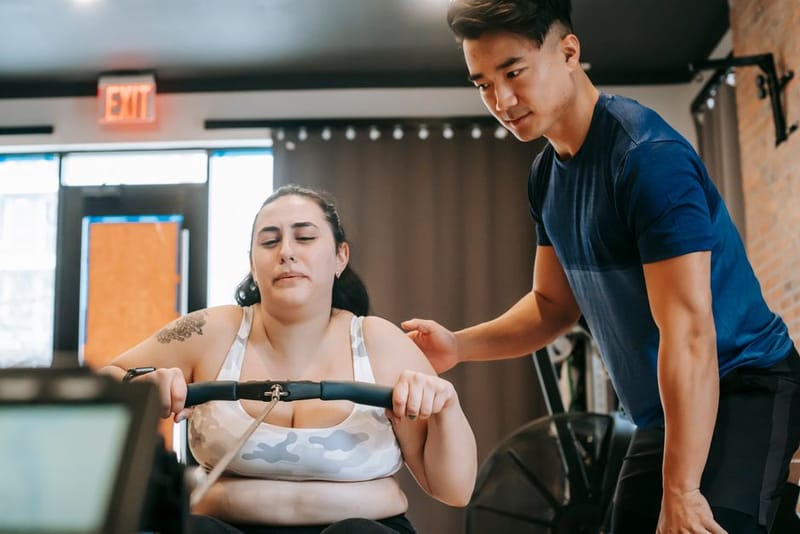
A rowing machine is one of the best cardio options for a small flat: it trains your whole body, folds down smaller than a treadmill, and - with the right model - barely registers next door. The catch is that not all rowers are quiet, and a flat adds two problems a house doesn't: the neighbours below you and the floor beneath the machine.
Can you use a rowing machine in a flat?
A rowing machine in a flat is entirely realistic, and in some ways easier to live with than a treadmill or exercise bike. Rowing is low-impact - your feet never leave the footplates, so there's no repeated thudding to travel through the floor. Most of the noise a rower makes is a smooth, rhythmic mechanical sound rather than the heavy footfall a running machine sends downstairs.
The main constraint is length. In use, a typical home rower is around two metres long, because the seat runs the full length of a rail. That sounds like a lot, but almost every model built for home use folds at the hinge or stands on its end for storage, shrinking to a footprint not much bigger than a doorway. So the deciding factors for a flat aren't really floor area - they're how quiet the machine is and how it stores.
Which rowing machine resistance type is quietest?
The resistance mechanism decides how loud a rower is, and it's the single most important choice for a flat. There are three common types, and they sit on a clear noise spectrum. For the mechanical background on each, the Wikipedia overview of indoor rowers is a good primer.
Magnetic rowers use a magnetic brake acting on a flywheel. Nothing rubs and no air moves, so they are near-silent - the loudest sound is usually the seat gliding on its rail. They set resistance at fixed levels rather than reacting to how hard you pull, and they're the quietest option by a wide margin. This is why magnetic is the default recommendation for flats and shared buildings.
Air rowers generate resistance by spinning a fan cage, so the harder you pull, the more air the blades move and the louder the whoosh. They give the most realistic on-water feel and scale infinitely with effort, which is why Concept2 (the US brand whose air rowers are the gym standard) dominates competitive rowing. But that whoosh is the loudest sound of any rower type, and it peaks exactly when you're working hardest - not ideal through a thin party wall.
Water rowers pull a paddle through a tank of water, producing a swishing sound that many people find pleasant rather than intrusive. They sit between magnetic and air on the noise scale: quieter than a fan, but the swoosh still rises with effort and carries further than a magnetic brake's near-silence.
Will the downstairs neighbours hear it?
This is the real question in a flat, and the answer depends on which kind of noise you mean. There are two, and they behave very differently.
Airborne noise is the sound that travels through the air - the fan whoosh, the water swish, the click of the chain. It's what someone in the same room or through a thin wall hears, and it's the noise the resistance type controls. Pick magnetic and you've largely solved it.
Impact (structure-borne) noise is vibration that travels through the building itself - the floor, the joists, the walls. It's what the flat below feels, and it matters more than airborne noise for downstairs neighbours. A rower produces far less of this than a treadmill, but the flywheel's spin and the seat rolling back and forth still send a low hum into a bare hard floor. The fix is to decouple the machine from the floor with a dense mat, which absorbs the vibration before it reaches the structure.
Consideration also helps as much as hardware. Rowing at 7am or 11pm is more likely to draw a complaint than the same session mid-evening. Persistent noise that unreasonably disturbs neighbours can be treated as a statutory nuisance by a local council, so it's worth being mindful of timing - the UK government's guidance on noise pollution explains how that works. A magnetic rower on a good mat, used at sociable hours, is very unlikely to cause a problem.
How do I protect the floor?
A mat under the rower does double duty: it protects the floor and it cuts the vibration travelling downstairs. On hard floors - laminate, engineered wood, tile - the concern is the seat rail flexing under your bodyweight and the machine's feet scuffing or denting the surface over hundreds of sessions. On carpet, a rower can crush and mark the pile, and sweat can soak in.
A high-density rubber gym mat is the best all-rounder: it's heavy enough to stay put, dense enough to damp vibration, and wipes clean. Interlocking EVA foam tiles are a cheaper, lighter alternative that's kinder on the joints if you step off onto them, though they compress more over time. Whichever you choose, buy one longer than the rower's footprint so the whole rail and both feet sit on it, with room for the seat to travel. A mat that only covers the middle leaves the ends free to mark the floor.
How do you store a rowing machine in a small flat?
Storage is where home rowers earn their place in a small flat, and the mechanism you picked for noise usually dictates how it packs away.
Folding magnetic rowers hinge in the middle and then tip up to stand vertically, so a two-metre machine becomes something close to the footprint of a floor lamp - easy to wheel into a corner or behind a door. Water rowers are designed to stand on end, taking up roughly the floor space of a dining chair when upright. Air rowers such as the Concept2 separate into two pieces that stack against a wall, rather than folding as one unit.
Before you buy, check the folded or upright dimensions, not just the in-use length - that stored footprint is what you actually live with day to day. Standing the rower upright against a wall, on its mat, is the classic small-flat move: it clears the floor in seconds and keeps the machine visible enough that you'll actually use it. For more on squeezing kit into tight spaces, see our guide to storing home gym kit in a small flat.
Frequently asked questions
Are magnetic or air rowers quieter?
Do I need a mat under a rowing machine?
Can you row early in the morning in a flat?
How much space does a rowing machine need when folded?
JLL R200 Review: A Budget Folding Rower for Flats

Quiet Home Cardio for an Upstairs Flat
Under-Desk Treadmill vs Walking Pad