Can You Use a Walking Pad on Carpet?
Yes, with a hard flat mat. Carpet pile blocks the underside cooling vents and lets the deck flex, and deep pile is where a mat stops being optional.
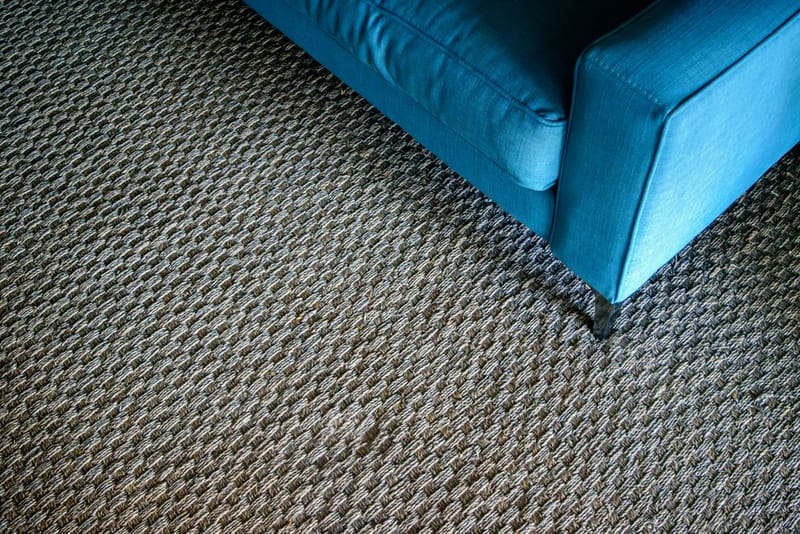
It is one of the most common questions about walking pads, and the honest answer is a qualified yes. Carpet does not stop one working, but it changes three things that matter: how the motor cools, how the deck behaves under load, and what your warranty is likely to cover if something fails.
Why is carpet a problem for a walking pad?
Most walking pads vent from underneath. The motor housing sits close to the floor and relies on the gap beneath the deck to move air, so putting it on pile puts soft, insulating fibre directly across the intake. A hard floor keeps that gap open; carpet partially closes it.
The second issue is flex. A walking pad is designed to sit on a rigid surface, and carpet compresses unevenly under a moving load. The deck can rock slightly with each step, which puts cyclic strain through the frame, the rollers and the belt seams rather than letting the floor take it.
Neither is dramatic on a low-pile carpet with light use. Both get worse as pile depth, user weight and session length go up, which is why the answer depends on your setup rather than being a flat yes or no.
What kind of mat should you use?
The mat is doing a different job here than on a hard floor. On laminate a mat is about noise and floor protection, so a soft rubber mat is fine. On carpet the mat's main job is to provide a RIGID, FLAT base, so softness works against you.
What works is something hard and non-compressible, wide enough that the whole footprint sits on it with nothing overhanging: a purpose-made treadmill mat with a firm core, a sheet of plywood or hardboard cut to size, or a hard chair mat of the type sold for carpeted offices. What does not work is a thick foam or interlocking gym tile, which adds another compressible layer and makes the flex problem worse.
Keep the vents clear as well as the base flat. If the underside has visible grilles, do not let the mat's edge or the carpet pile creep over them.
Does using it on carpet affect the warranty?
It can, and this is the part most people miss. Manufacturer manuals commonly specify a level, hard, flat surface for use, and a motor that fails from restricted airflow is the kind of fault a manufacturer may reasonably attribute to the setup rather than the machine.
That is not a reason to avoid carpet, but it is a reason to read your own model's manual before deciding, and to use a hard mat if it specifies a hard floor. Check the wording for your specific unit rather than assuming, because the requirement varies between brands.
Is a walking pad on carpet quieter or louder?
Carpet genuinely helps with impact noise, which is the footfall thud that travels through the structure and matters most in a flat. That is the one real advantage, and it is why this question comes up so often in upstairs rooms.
You do not have to give it up to get a rigid base. A hard mat placed ON the carpet keeps the carpet underneath as an isolating layer while giving the deck something flat to sit on, which is the combination worth aiming for. If noise is the main concern, our guide to quiet home cardio for an upstairs flat covers the wider picture.
What Is a Walking Pad? A UK Guide for Small Homes
Walking Pad Weight Limits Explained
Best Walking Pad for a Low Ceiling